Green Design
DMD staff is committed to “Green” design practices and principals and are leaders in pioneering such practices and principals. Applications below are aimed at energy savings and more efficient design practices. We strive to produce energy efficient designs and to work with energy efficient technologies.
 Traffic Signal Optimization
 Gasoline powered motor vehicles are key contributors to air pollution. When vehicles stop at red lights and then subsequently accelerate, excess fuel is consumed producing additional carbon dioxide emissions. By optimizing signal timings, the number of stops and idle time can be reduced, thus reducing carbon dioxide emissions. Signal coordination can have a huge benefit in reducing both carbon dioxide emissions and vehicle delays. DMD has great success with respect to optimizing signal coordination and reducing emissions.
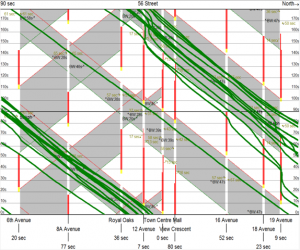 When optimizing signal coordination, we first record the existing conditions by driving the corridor repeatedly during each time of day using GPS based time space modeling software. We then model the corridor using traffic engineering simulation software and optimize/refine the traffic controller timings for all intersections in the corridor. The new signal timings are simulated in controllers and further optimized/refined, and then installed in the traffic controllers in the field. After the timings are implemented, we verify the coordination and measure the improvement of the traffic flow. This is done by repeatedly driving the corridors in peak periods, recording the results using GPS based software and then comparing the before and after travel times. If required, further refinements are made.
The key with this process is the before and after assessments completed by repeatedly driving the corridors. The results are not based solely on software simulations; they are based on actual flow of traffic in peak periods. Using measured results and Natural Resources Canada’s Idling Calculator, the annual Greenhouse Gas (GHG) reduction benefits can be achieved following the implementation of the optimized signal timing plans for the corridors listed.
The average driver travel time in peak periods is reduced by approximately 20-40 %, as found by comparing the actual pre and post coordination travel times through the corridors. Improving signal operation by updating signal timings is a cost effective solution to reduce delays, driver frustrations and GHG emissions.
LED Lighting and Adaptive Lighting Controls
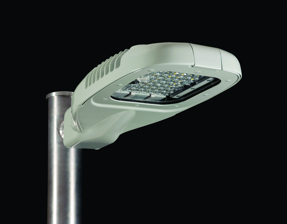
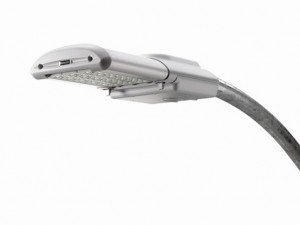 LED street lighting is a new and emerging technology. The lighting industry is investing millions of dollars developing new LED products which offer substantial energy savings through improved optical efficiencies. Energy savings are in the 50% -60% range based on number of studies undertaken throughout North America. As such, this technology has caught the interest of many.
Adaptive controls allow for addition energy savings ranging from 10% – 30% along with streamlined asset management.
The selection of LED street lighting and adaptive controls are, however, an area filled with complexity and misinformation. In the case of a conversion from high pressure sodium to LED, it’s not simply a matter of selecting an LED wattage that is 50 – 60% of the existing high pressure sodium luminaire. LED luminaires distribute the light very differently than past cobra head style luminaires. Unlike cobra head luminaires the performance of LEDs can often vary dramatically from one manufacturer to another. To assess LED luminaire performance we use a unit power density (watts/area) assessment method based on typical roads, lighting poles and pole spacing. In undertaking these assessments we have found that LED luminaire wattages with similar IES rated distributions can vary dramatically. By using this method we are able to maximize energy savings benefits while at the same time confirming that the required light levels are maintained.
DMD have been involved in major LED conversion and adaptive lighting controls projects across Canada. We work closely with jurisdictions to maximize energy savings, thus resulting in reduced Greenhouse Gas (GHG).
Electric Car Charging Stations – DMD have been involved in numerous projects involving the selection and implementation of electrical car charging station. We have undertaken electrical design for both Level 1 and Level 2 car charging station into existing and new electrical systems. Our designs follow the Canadian Electrical Code requirements.